
You have five receipts to submit and 20 minutes before your next meeting. Then you have to find one of the receipts in your email, sign in again, and check which expense category to use. Twenty minutes later, you’re still filling in the form.
Pick one task you do often. Before you start, write down what “done” means and how long you think it’ll take. Time it from the first step to the finish, then keep one line for next time: task, estimate, actual time, what added time. A phone stopwatch and a note are enough.
Estimate the whole task, including setup and review
- Name a finish you can see. For “do expenses,” that could mean seeing the confirmation that five receipts were submitted. For “review chemistry,” it could mean answering and checking five practice questions.
- Count the steps on either side of the main work. For the receipts, allow 4 minutes to find them and sign in, 12 to enter and attach them, and 4 to check and submit. If you’ve timed a similar batch before, use that as your starting point.
- Time it from the first step to the finish. Start the stopwatch when you begin looking for the receipts. Stop when you see the confirmation. If you take a call in the middle, record it beside the total so you can decide whether to allow for similar interruptions next time.
See where the extra seven minutes went
Say it took 6 minutes to gather the receipts and sign in, 16 to enter and attach them, and 5 to review and submit. That’s 27 minutes in all. The note you keep can be as brief as this.
Submit five receipts. Estimated 20 min. Took 27 min. Looked for an emailed receipt and checked one expense category.
Next week, start with about 27 minutes for a similar batch. If three comparable batches eventually take 24, 27, and 31 minutes, use 24–31 minutes as a working range. Before a meeting you can’t move, you might reserve 35 minutes to give yourself room for a slow sign-in. If you have 12 receipts, use those past times as a reference and allow more time for entry and review.
If you only have 15 minutes today, pick a part that fits, such as finding and sorting the receipts. Record what you finished when time is up. Keep that partial result separate from the time it takes to submit the whole batch.
Why a 20-minute estimate can feel right
The U.S. National Institute of Mental Health lists planning and time management among the areas adults with ADHD can find difficult. The estimate may also leave out small decisions you only notice once you start, like working out how to categorize a receipt. NIMH on ADHD in adults
In research on the planning fallacy, people tended to imagine how a task would go and predicted they would finish sooner than they actually did. In one experiment, asking participants to connect past experiences to the task they were estimating helped correct that optimism. This research looked at task estimates in general. A record of your own similar tasks gives you something concrete to plan from. Buehler and colleagues, 1994 (PDF)
Use a Focus Flight as a checkpoint
Say you have a 25-minute work block and some room afterward. Choose a Focus Flight in FlightFlow, set it for 25 minutes, and pick a virtual destination. Write down your estimate before takeoff. Start your stopwatch and begin looking for the receipts when the flight begins.
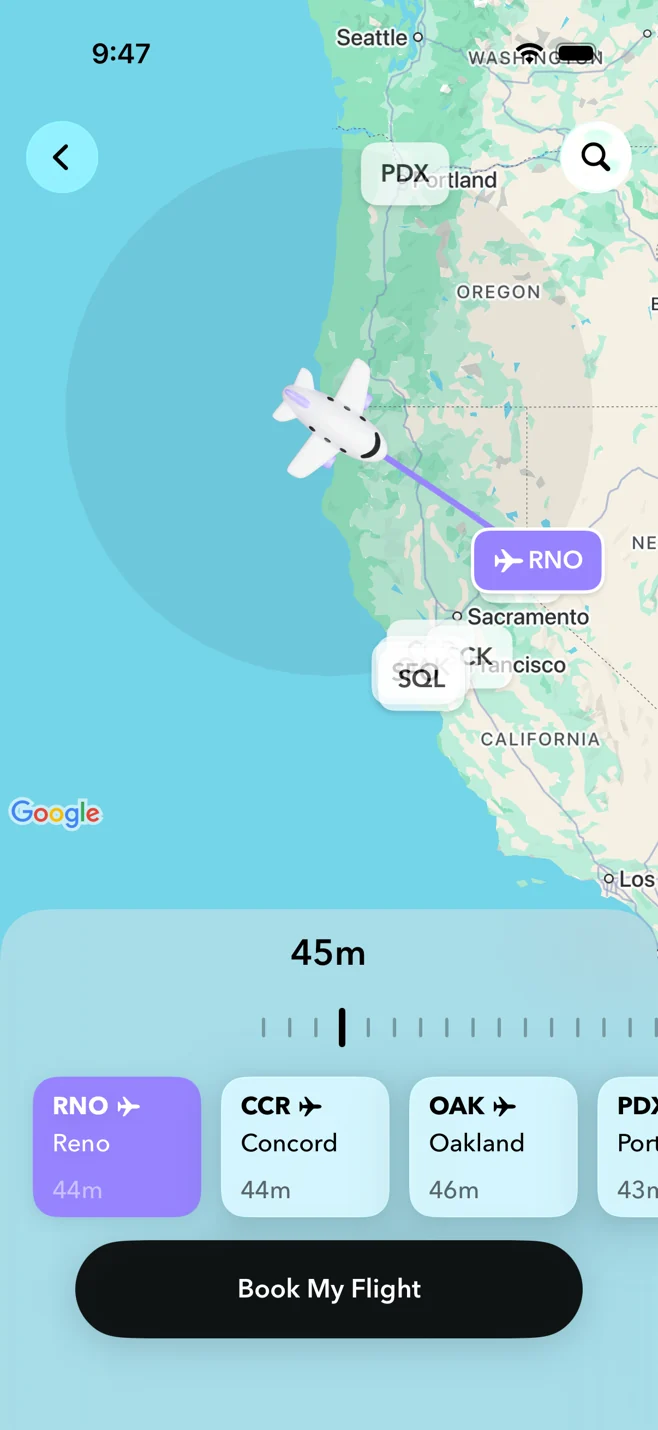
At landing, check where you are. If you’re still reviewing and submitting, keep the stopwatch running until the confirmation appears. In the example, you set aside 25 minutes and took 27. Write 27 in your note so next week’s estimate includes those last two minutes.
You can try a Focus Flight with one task you’ll do again. If the harder part is picking up a project after a gap, see how to restart a long-term goal with ADHD.