
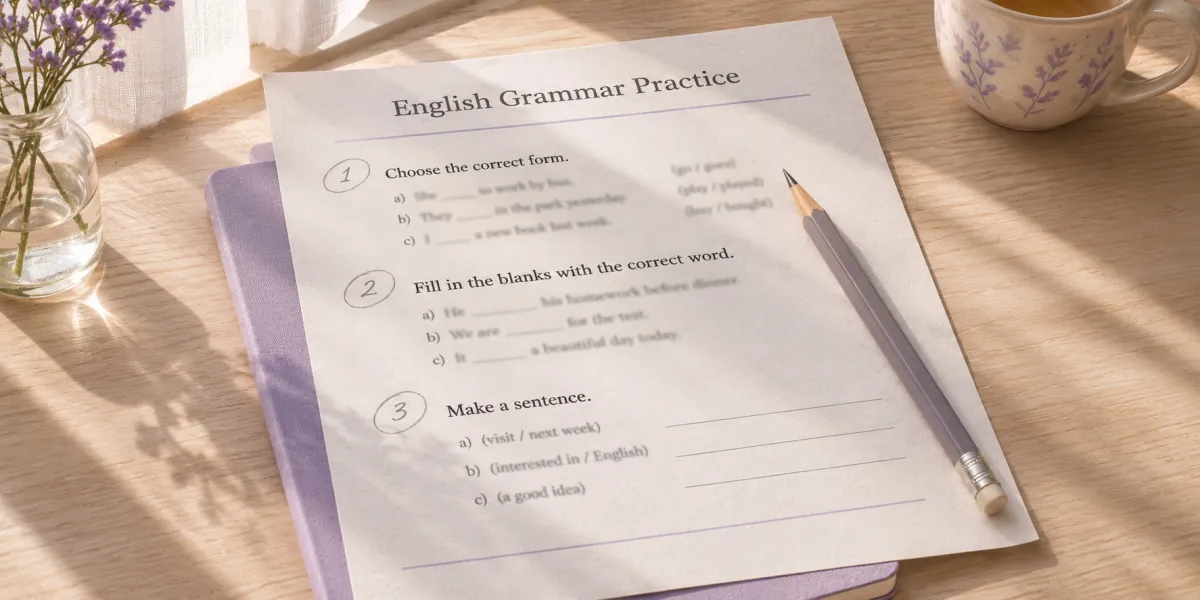
You sit down to study for an English exam. A few minutes later, you’re reviewing vocabulary you already know, and the grammar page you meant to tackle is still untouched.
Open that page and put your pencil on the first unanswered question. Read the sentence and underline a word or phrase that could help you choose an answer. That gives you something to do right now. Jump to the 15-minute study plan.
Why the first step feels hard
With a familiar vocabulary list, you can cover the answers and start testing yourself. “Study for the exam” leaves you to decide which topic to review, how much to do, and when to look at the answer key.
Give the harder page a starting point you can see. Pick one topic, circle three questions, and leave time to check them. If the whole page still feels like too much, cover the other questions with a sheet of paper and try the first one.
Start with one page and three questions
Set aside 15 minutes for one exercise page in the English grammar unit you keep skipping. Here’s how that might go if you mix up the simple past and the present perfect.
- First 2 minutes. Choose the questions. Circle three that ask you to choose between the two tenses. Use the first circled question as your starting point.
- Next 8 minutes. Try each one with the answer key closed. Underline the time clue and write your answer. Put a question mark beside any guess, then move on. You’ll know which answer to look at first when you check.
- Last 5 minutes. Check and choose one to redo. Open the key and write a short reason beside one mistake or guess. Mark that question for tomorrow and leave an instruction such as “Redo question 4 and underline the time clue.” If you only reached one question, check that answer and mark where to start next.
Try it with three questions about Kyoto
Choose visited or have visited for each blank. Underline the time clue before you look at the answers.
- I ___ Kyoto last spring.
- I ___ Kyoto twice so far.
- We ___ the railway museum in Kyoto yesterday.
Check your answers. Look back at the clue you underlined as well as the word you chose.
- Visited. Last spring places the visit in a period that has ended.
- Have visited. So far counts visits up to the present.
- Visited. Yesterday gives a specific, finished time, just like last spring in the first sentence.
If you guessed the first one, write “last spring → finished time” in the margin and try it again tomorrow. For more examples, see the British Council guide to the present perfect.
Give that page a destination
Once you’ve circled the questions, you have a job for a short Focus Flight in FlightFlow. Set aside about 15 minutes and choose a virtual destination you’d enjoy flying to. Leave the workbook open with your pencil by the first question.
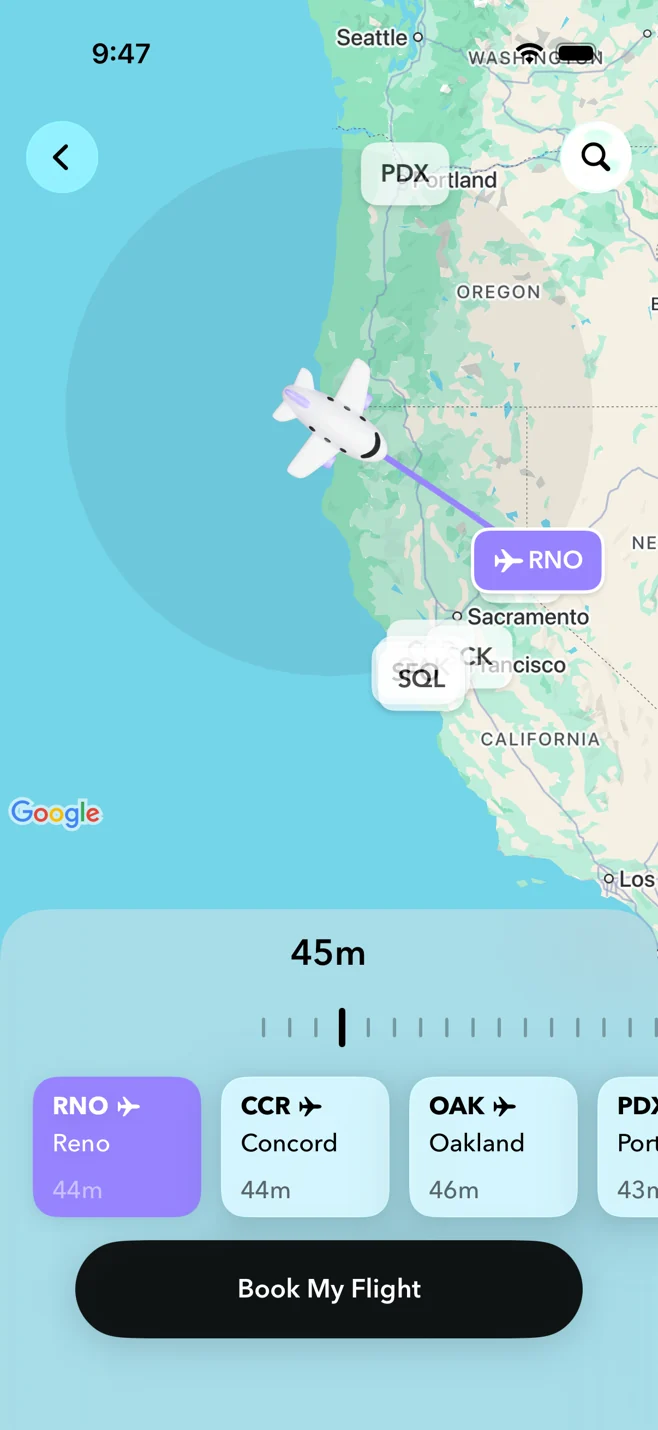
Pick a seat and tear the boarding pass. When you take off, underline the clue in the first question and make your attempt. As landing approaches, open the answer key and leave one question marked for next time.
For your next review, get FlightFlow and try one page on a short Focus Flight.